Charlotte's Cherries: A Global Connection Through Trees
Published on May 20, 2026
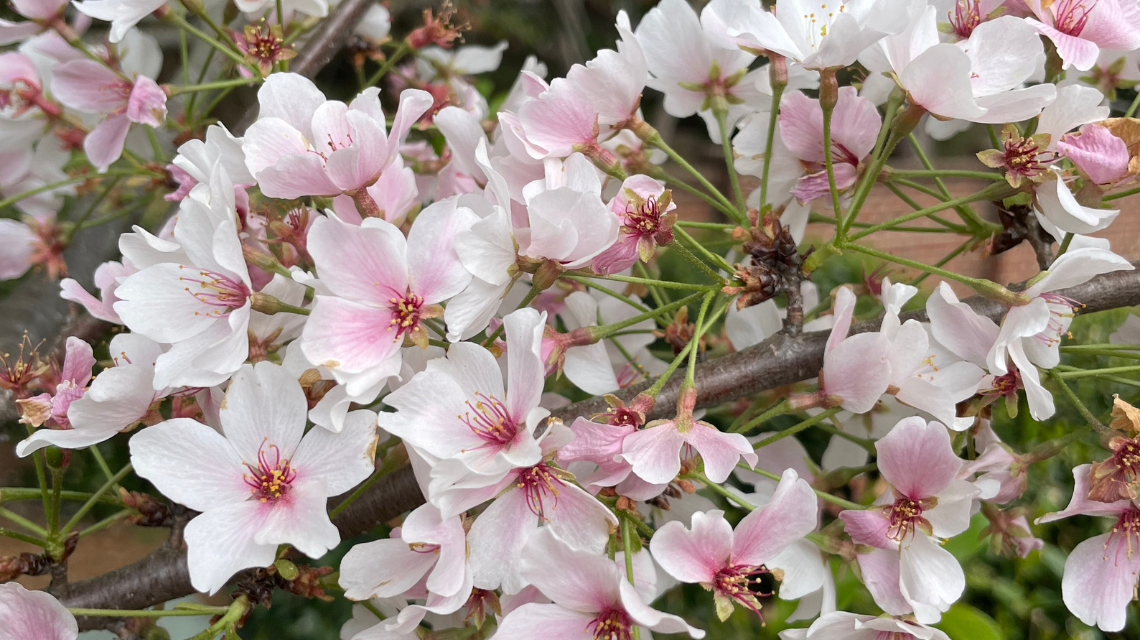
Cherry blossom in Charlotte (Landscape Management)
By Morgan Newell
Seeing the cherry blossoms in Japan is a life goal for travelers across the world. The ornamental trees line the streets of Japanese cities and towns, creating a mad dash to catch the beautiful March bloom before the ground becomes covered with “pink snow.” The same can be said about Washington, D.C. People flock to the city to get a similar experience of watching the cherry blossoms, affectionately known as cherries, in full bloom. But the state of North Carolina has its own cherry trees, including one in the cherry blossom family that’s native to this area.
History of the Cherry Blossoms
The origin country of the cherry blossom is hotly debated, with South Korean, Japanese and Chinese officials all claiming the trees came from their country. While it’s true that wild cherries are prevalent across East Asia, the ornamental versions we see and love today are widely believed to be from Japan. These trees, or Sakura, as they're called in their home country, were bred, cultivated and perfected for centuries. This meticulous work created over 300 different types of cherries, cementing the beauty of the cherry blossom as a symbol of Japanese culture. So, how did these cultural icons of Japan end up in America? It all began with a visit and a lot of convincing.
According to the National Park Service, diplomat and world traveler Eliza Scidmore visited Japan in 1885. She fell in love with the sight of cherry blossoms spanning the countryside. After returning to D.C., Scidmore urged the U.S. Army Superintendent of the Office of Public Buildings and Grounds to plant cherry trees on the waterfront of the Potomac River, but she was promptly rejected. For more than two decades, Scidmore continued to pitch the idea to every new superintendent.
Okame cherry blossom trees (Landscape Management)
It wasn’t until 1907, when U.S. Department of Agriculture official Dr. David Fairchild successfully kept cherries growing on his property for a year, that people started to listen. Dr. Fairchild and his family advocated for planting cherry trees along Washington, D.C. avenues. A year later, Fairchild delivered a speech at an Arbor Day event that would fall on the ears of one Eliza Scidmore. Dr. Fairchild proposed creating a field of cherries in an area called the “Speedway.” This idea became the fuel Scidmore needed to reignite her mission of bringing cherry blossoms to the U.S.
In 1909, Scidmore’s pleas finally resonated with the right audience. In a letter to First Lady Helen Taft, Scidmore wrote that she was going to raise the money to purchase some cherry trees and donate them to the city. Taft responded with her approval, and the next day, the Japanese counsel in New York suggested a donation of 2,000 cherries as a gift to the U.S. The first lady accepted.
When the cherries finally arrived in January 1910, they unfortunately carried bugs and potentially threatening diseases with them and had to be destroyed instead of planted. To make up for the blunder, Tokyo Mayor Yukio Ozaki insisted on sending more than 3,000 cherries to the U.S., ensuring their beauty would remain intact. Two years later, the trees would stand across the banks of East Potomac Park, becoming a tourist destination for decades to come.
Cherry Blossoms in Charlotte
Experts can’t definitively say how cherry blossoms made their way down to North Carolina. Research reveals the D.C. gift inspired many who owned private estates to acquire their own trees. Cities have also purchased cherry blossoms from commercial nurseries to plant in parks and along roadways, which is what City Arborist Laurie Reid says the City of Charlotte is doing now.
“We get them from different places, but the cherries have been growing here for a long time,” Reid said.
There are a lot of areas in Charlotte that have cherries. Reid says the city mostly carries Yoshino and Okame trees. Yoshino, the most popular across the country, has light pink flowers and blooms in the middle of February. Okame has brighter pink flowers and is the first of the cherries to bloom in early March. They are sourced from nurseries from here down to Georgia.
“Our environment is very similar to Japan,” Reid said. “Similar latitude, so they grow very well here, even though our soil might be a little different.”
Cherry blossoms photographed in front of the Charlotte skyline (David Flower)
Despite thriving here, cherry blossoms aren’t native to North Carolina. So, wouldn’t that make them an invasive species? Not necessarily. As Reid explains it, many trees across the state aren’t native. However, “non-native” and “invasive” aren’t interchangeable. A tree has to have certain characteristics to be considered invasive. The arborist says invasive species have a root system that is so expansive, it starts to compete with other trees. Also, these species produce so many seeds that it becomes almost impossible for any other seedlings to germinate. Cherries are the opposite. Reid says cherries have small seedlings and don’t produce nearly enough to make a difference. Their root system also doesn’t grow far enough for them to overtake any other trees. So, non-native: yes. Invasive: no.
“People love cherries,” Reid said. “I remember a woman who moved down here from Northern Virginia wrote to us because she didn’t know there were different types of cherries. I love them, because they are the earlier blooming trees we have, so I know spring is coming when I see the cherries blossoming.”
Non-native cherry blossom trees have been flourishing and attracting the eye of Charlotteans for quite some time now. However, another tree in the same “family” has been standing resolute and contributing to our environment for many more generations.
The Native Cherries of North Carolina
“They have literally always been here,” Reid said.
Considered a tall, large maturing tree, the native black cherry isn’t like its cherry blossom botanical cousin. While it does flower, the petals are small and white, clustered together on a long stem. The only thing these cherries attract are bugs, because of the musky smell they emit for pollination purposes. It also gets a fungus called a black knot, which can ultimately kill the tree.
The flower of the native black cherry (Landscape Management)
Okay, so maybe the black cherry isn’t the most appealing when thinking about it alongside the ornamental cherries we’ve come to love. However, this native tree contributes to important parts of this state’s environment. Our state butterfly, the Eastern Tiger Swallowtail, lays its eggs on the black cherry. The caterpillars eat the leaves, and their chrysalises hang on its branches. Our state’s songbirds, like chickadees and bluebirds, also eat the caterpillars, making black cherries an important food source for the baby birds nesting nearby. Plus, this native tree attracts flies with its smell. Those flies then carry pollen to other plants, contributing to our natural ecosystems.
“Ecologically for the production of bugs and insects, it is a really important,” Reid said. “Keeping those trees in your yards is a really great thing.”
Two Distant Cousins, Living In Charlotte
To find a black cherry, you might not even have to look far. According to Reid, most people have them in their backyard and don’t even know it. Wild black cherry trees are scattered across the North Carolina mountains and Piedmont. You can easily find them in national and state parks. Here in Charlotte, places like McAlpine Creek and Reedy Creek Nature Reserve are crawling with them.
As for the cherry blossoms, you can see the soft pink leaves of the Yoshino while driving the streets of Charlotte. The City of Charlotte’s Landscape Management division plants many of these trees in roadway medians. To see them up close, visit Freedom, Romare Bearden and Independence Parks, to name a few. Of course, if you stop by the Landscape Management offices on 701 Tuckaseegee Road, the city arborist would be more than happy to show you and tell you all about the ornamental and black cherries.
The City of Charlotte is widely known as the “City of Trees.” To learn more about Landscape Management and how they keep our tree canopy maintained and growing, visit the Landscape Management webpages.