Her Strength, Their Mission: Supporting Burn Survivors Statewide
Published on February 09, 2026
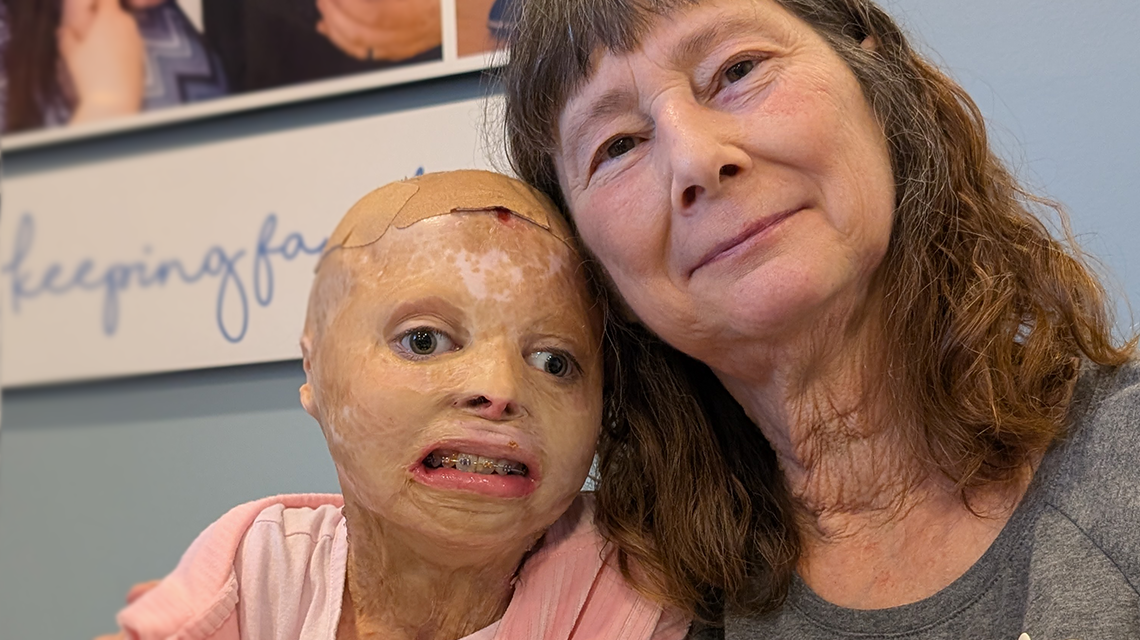
Emily sits with her grandmother during a visit to the Ronald McDonald House in Winston-Salem. Emily sustained severe burn injuries as an infant and continues to return for specialized care. Courtesy: Ronald McDonald House Charities® of the Piedmont Triad
By Kevin Campbell, Charlotte Fire
Emily was just 14 months old when a backyard accident at her north Charlotte home changed her life. Burning leaves and fumes from a small fire ignited an empty gas can, leaving her with severe burn injuries and beginning a long and difficult road to recovery.
More than a decade after her injury, Emily continues to receive specialized burn care, returning regularly to the burn center that helped save her life with a resilience that has left a lasting impression on firefighters, caregivers and families who have met her along the way.
Her story reflects the mission of the North Carolina Firefighters’ Burned Children Fund, a firefighter-founded nonprofit dedicated to supporting burn survivors and their families while working to prevent burn injuries across North Carolina.
That mission was recently highlighted during a visit to Winston-Salem involving Charlotte Fire Explorers and members of the men and women of Charlotte Fire. The group toured the Atrium Health Wake Forest Baptist Burn Center, the Ronald McDonald House Charities Piedmont Triad, and the NC SECU House, gaining firsthand insight into the long-term care and support burn survivors and their families often need.
Charlotte Fire Explorers tour the Atrium Health Wake Forest Baptist Burn Center, gaining insight into the specialized care required for burn survivors.
For the Firefighters’ Burned Children Fund, the visit was more than educational. It represented the continuation of support that often begins at the scene of an emergency and extends long after a patient leaves the hospital.
“Our main mission is helping people who have sustained burn injuries with non-medical expenses,” said Charlotte Fire Capt. Henry Cook, president of the Charlotte-Mecklenburg chapter of the Fund. “Those are the things families don’t always think about until they’re suddenly living it.”
Cook said families are frequently transported to burn centers with little warning, arriving without clothing, personal items or a plan for how to manage extended stays away from home.
“We don’t pay medical bills,” Cook said. “We help with lodging, meals, travel and basic necessities. The things that aren’t covered but are absolutely necessary.”
During the visit, medical professionals spoke with the group about burn care, explaining both the physical treatment process and the long-term emotional and mental health challenges survivors may face. The conversations gave Explorers and firefighters a clearer understanding of the continuum of care that follows the initial emergency response.
The experience took on added meaning when the group learned a burn patient from Charlotte had recently arrived at the center. With guidance from medical staff, the Explorers observed how burn patients are assessed and how multidisciplinary teams coordinate care.
Charlotte Fire Explorers observe from a designated area as medical professionals explain how burn patients are assessed and cared for at the Atrium Health Wake Forest Baptist Burn Center.
“It helped them understand what happens after the emergency response,” Cook said. “They saw the care, the teamwork and the long-term commitment involved.”
After leaving the burn center, the Explorers and members of Charlotte Fire toured the Ronald McDonald House and the NC SECU House, facilities that serve as temporary homes for families during extended hospital stays. Both provide spaces that allow families to remain close to loved ones while maintaining a sense of stability during some of the most difficult moments they will face.
The Firefighters’ Burned Children Fund routinely helps families access these resources, easing the burden of travel and housing so they can focus on their loved one’s recovery rather than logistical challenges.
“We try to reach families as early as possible,” Cook said. “We want them to know help is available and that they don’t have to figure everything out on their own.”
That support has been a constant presence in Emily’s life.
Emily and her grandmother share a moment inside the Ronald McDonald House, which has served as a second home for the family throughout years of treatment and recovery. Courtesy: Ronald McDonald House Charities® of the Piedmont Triad
Emily was burned over 47 percent of her body. Her family was told early on that her survival was uncertain, but she fought through the initial trauma. Specialized treatments, including advanced cell-based therapies, helped her heal and continue progressing through recovery.
Throughout that process, Emily and her family stayed repeatedly at the Ronald McDonald House, which became a familiar and stabilizing place during frequent hospital visits. According to a story published by Ronald McDonald House Charities Piedmont Triad, Emily found comfort in simple routines, therapy sessions and moments of normal childhood during her stays
Now a fourth-grade student, Emily is described as bright and talkative, with a love for reading and a strong sense of independence. Her resilience has made her a familiar face to staff and firefighters alike.
“She’s been through more than most adults,” Cook said. “And she’s still one of the happiest kids you’ll ever meet.”
Charlotte Fire Capt. Henry Cook, president of the Charlotte-Mecklenburg chapter of the North Carolina Firefighters’ Burned Children Fund, has spent years supporting burn survivors and their families through advocacy and non-medical assistance.
Emily’s family has remained connected to the Firefighters’ Burned Children Fund, attending events and staying engaged with firefighters who supported them in the earliest days after her injury.
“She shows families there is life after a burn injury,” Cook said. “That’s important for people to see.”
The Firefighters’ Burned Children Fund was founded in the early 1980s by Charlotte firefighters who recognized a critical gap in care once burn patients left the hospital. What began as a local effort has grown into a statewide network of chapters supporting both pediatric and adult burn survivors.
The Fund raises money through a variety of methods, including aluminum can recycling, and uses those funds to provide non-medical assistance, support burn prevention education, and create opportunities for survivors to connect with others who share similar experiences.
Charlotte Fire Explorers and members of the men and women of Charlotte Fire gather in Winston-Salem as part of a visit focused on burn care, recovery and long-term survivor support.
Community, Cook said, is especially important for children recovering from burn injuries.
“When kids have scarring or visible injuries, they worry about how people see them,” he said. “Being around other survivors helps them regain confidence and realize they’re still just kids.”
The organization also supports burn camps, survivor retreats and educational scholarships for burn survivors pursuing higher education.
“We’ve seen survivors go on to college and into careers they never thought possible,” Cook said. “That’s the long-term impact.”
Charlotte Fire Chief Reginald Johnson said the Fund reflects the fire service’s responsibility beyond emergency response.
“Our firefighters don’t stop caring when the call ends,” Johnson said. “The Firefighters’ Burned Children Fund represents the compassion of the fire service and our commitment to stand with families long after the emergency is over.”
Medical staff speak with Charlotte Fire Explorers about the physical and emotional challenges burn survivors face and the importance of long-term care.
While the work can be emotionally demanding, Cook said the ability to ease even a small portion of a family’s burden makes it worthwhile.
“You see relief when families realize they’re not alone,” he said. “That’s why we keep doing it.”
As the Firefighters’ Burned Children Fund continues its work across North Carolina, leaders emphasize that its success depends on continued community support.
You can donate and support the North Carolina Firefighters’ Burned Children Fund via PayPal by clicking this link.
Donate Here