Our Organization
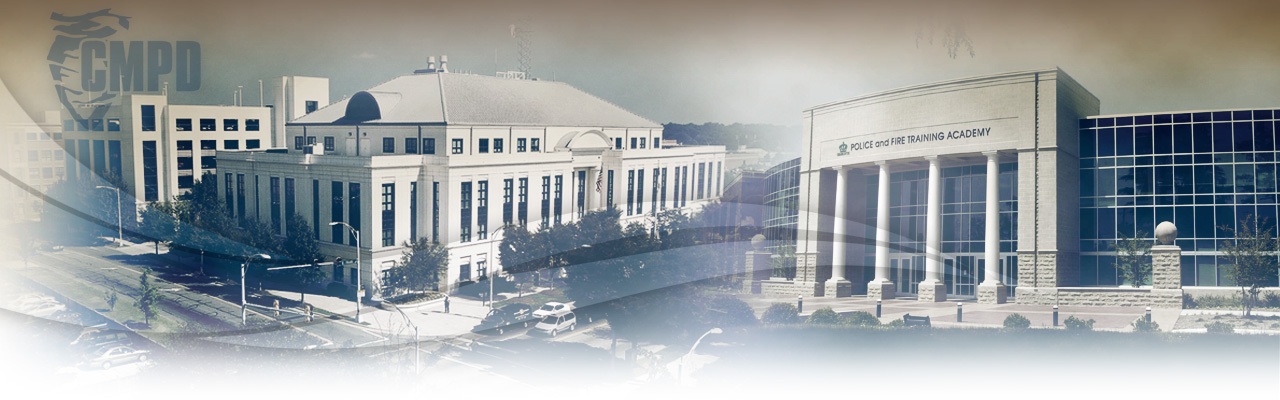
The goal of the Charlotte-Mecklenburg Police Department is to make Charlotte one of the safest large cities in America. To do that, we continually advance strategies that prevent crime. We find ways to engage the community in taking steps that help minimize opportunities for victimization. We explore appropriate policy direction with the Mayor and City Council. We seek solutions to the complex community problems that contribute to crime and disorder. And we enforce the laws and arrest the people who break them.
The officers, staff and volunteers with the Charlotte-Mecklenburg Police Department take very seriously their duty to provide citizens with professional, innovative and effective service. Community safety is a shared responsibility and we are committed to working in partnership with neighborhood residents and business owners as well as other local, state and federal agencies to reduce crime and increase safety.
MISSION STATEMENT
CMPD implements solutions and expands collaborative relationships within our organization and community to enhance trust, fairness and respect, to increase public safety.
VISION STATEMENT
CMPD envisions becoming the trusted, respected and sought-after community partner by serving our citizens and taking care of our employees.
Positive progress will be defined by…
- Embracing community collaboration
- Reflecting the community that we serve
- Becoming the model for other law enforcement organizations
- Being the safest major city
We will achieve our vision through four core strategic Priorities
- Crime Management
- Community Collaboration
- Professional Accountability
- Employee Wellness
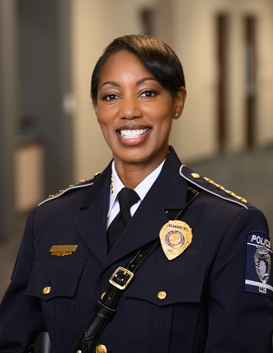 Estella Patterson
 was appointed as chief of the Charlotte-Mecklenburg Police Department (CMPD) on December 1, 2025. She returns to Charlotte, after serving 25 years with CMPD and 3 ½ years with the Raleigh Police Department. Chief Patterson’s career reflects her passion and commitment to public service. Her priorities lie in reducing violent crime and disorder, enhancing community engagement and collaboration and improving employee morale and wellness.
Chief Patterson began her law-enforcement career in 1996, as a member of the 123rd recruit class of CMPD. Over the next 25 years, she served in a variety of roles from academy trainer to patrol sergeant, division commander, recruitment commander and Internal Affairs commander. She was promoted to deputy chief of police in 2019 and assigned over the Administrative Services Group and later the Patrol Services Group.
In August 2021, Chief Patterson was selected as chief of the Raleigh Police Department, serving until 2025. As Raleigh’s top cop, she led the capital city’s police department of over 900 sworn and professional staff employees. During her tenure, she introduced several firsts, including a civilian crash investigations unit and the Raleigh Police Department Foundation. Additionally, she led efforts to reduce violent crime and restore trust between the community and police.
Aside from serving her community, Chief Patteson served our country as a member of the U.S. Army Reserve from 1996-2005. She completed combat tours in Kosovo and Iraq and was the recipient of the Army Commendation Medal for meritorious service.
Chief Patterson earned her Bachelor of Arts degree in political science from the University of North Carolina at Charlotte and her Master of Science in criminal justice from the University of Oklahoma. She is a graduate of the 245th session of the FBI National Academy and attended the 56th Session of the Senior Management Institute for Police. She is a member of the National Organization of Black Law Enforcement Executives (NOBLE) and a commissioner on the Commission on Accreditation for Law Enforcement Agencies (CALEA).
The Office of the Chief

Bureau:
Human Resources Division Bureau Commander:
Tammy Pippen

Financial Management Division | 601 E. Trade Street | phone:
704-336-2334
Research and Strategic Planning | 601 E. Trade Street | phone:
704-301-8415
Deputy Chief over Patrol Services
 Deputy Chief Jacquelyn Bryley
 joined the Charlotte-Mecklenburg Police Department as a member of the 131st recruit class of 1999. She was promoted to her current rank in 2023.
As the Deputy Chief for
Patrol Services Group, she oversees all 13 Patrol Divisions and Airport Law Enforcement.
Major Stephen Iyevbele commands the Patrol Northwest Service Area, which includes Freedom, North, and Metro Divisions as well as the Airport corridor.
Major Brad Koch commands the Patrol Northeast Service Area, which includes Hickory Grove, North Tryon and University City Divisions.
Major Gene Lim commands the Patrol Southeast Service Area, which includes Central, Eastway, Independence and Providence Divisions.
Major Ryan Kendall commands the Patrol Southwest Service Area, which includes South, Steele Creek and Westover Divisions.
Airport Law Enforcement 601 E. Trade Street | phone:
704-336-2260
North Tryon Division 4045 North Tryon St., Suite B |
704-336-8398
University City Division 8452 North Tryon St. |
704-432-3900
Service Areas:
Patrol Southeast Service Area Commander:
Major Gene Lim
Steele Creek Division 2227 Westinghouse Blvd. |
704-336-7800
Deputy Chief over Administrative Services
The Deputy Chief of the
Administrative Services Group oversees the Communications Division, the Non-Emergency Police Services, the Computer Technology Solutions Division, and Crime Lab Division.
Major Dave Johnson is the commander of the Administrative Services Bureau which includes the Communications Division, Non-Emergency Police Services, and Records Management Division.
Major Torri Tellis is the commander of the Community Services Bureau which includes Community Engagement, Community Wellness Division, LGBT Engagement Committee, Education outreach & Youth Services Division and Animal Care and Control
Administrative Services Group Deputy Chief:
DC (vacant)
Facilities Planning | 601 E. Trade Street | phone:
980-346-9439
Fleet Management | 601 E. Trade Street | phone:
704-336-5691
Crime Prevention / Active Survival Program | 601 E. Trade Street | phone:
704-336-2310
Community Engagement Division | 601 E. Trade Street | phone:
704-432-0197
LGBTQ Engagement Committee | 601 E. Trade Street | phone:
704-619-2995
Deputy Chief over Special Operations
Deputy Chief Bret Balamucki joined the Charlotte-Mecklenburg Police Department as a member of the 124th recruit class of 1997. He was promoted to his current rank in 2025.
As the Deputy Chief for
Special Services Group, he oversees the Special Events, Transportation, Special Operations Divisions, the Lab and Evidence Bureau which includes Crime Lab Division, Property and Evidence Management Division and Crime Scene Search Unit, Public Safety Technology Solutions as well as Crime Analysis.
Major Michael Ford commands the Criminal Intelligence Division, the Special Events Division, which includes Accident Reconstruction, Motorcycle, and CATS Transit Units, as well as the Special Operations Bureau, which includes SWAT, Aviation, Canine and Arson/Bomb Units.
Ellen Thomas oversees the Public Safety Technology Solutions Division, which includes System Architecture, Application Development, and Operations Support for both Police and Fire.
Mike Humphrey oversees the Crime Analysis Division, which handles crime data and analytical assessment for the department.

Operations Command | 601 E. Trade Street
Special Operations Division | 1750 Shopton Road | phone:
704-336-2328
Special Events Division | 601 E. Trade Street | phone:
704-336-3229
Transportation Division | 601 E. Trade Street | phone:
704-353-1218
Accident Reconstruction Unit 601 E. Trade Street |
704-336-8403

Greenway Patrol Unit 601 E. Trade Street
Dignitary Protection Unit | 601 E. Trade Street
Division:
Public Safety Technology Solutions Division Leader:
Ellen Thomas
Technical, Network, Video Support | 601 E. Trade Street | phone:
910-301-3726
Application Admins & GIS | 228 E. Ninth Street | phone:
704-280-0701
CAD, Database Systems | 601 E. Trade Street | phone:
704-336-8847
Software Development and Support | 228 E. Ninth Street | phone:
980-722-8997
Deputy Chief over Investigative Services
Deputy Chief Ryan Butler joined the Charlotte-Mecklenburg Police Department as a member of the 137th recruit class of 2001. He was promoted to his current rank in 2025.
As the Deputy Chief for the
Investigative Services Group, he oversees all major felony investigative units, including Homicide, Crimes Against Children, Robbery, Vice/Gangs/Firearms, Sexual Assault, Human Trafficking, Cyber Crimes and Financial Crimes.
Major Stephen Fischbach is the commander of the Special Investigations Bureau, which includes Vice & Narcotics, VCAT, Crime Gun Suppression Team and ABC Units.
Major Michael Anderson commands the Criminal Investigations Bureau, which includes Homicide/ADW, Robbery, Sexual Assault, Missing Persons, Cyber Crimes and Domestic Violence Units.
Special Victims Division | 601 E. Trade Street | phone:
704-200-8945
Violent Crimes Division | 601 E. Trade Street | phone:
704-336-2328
Robbery/Cold Case Unit | 601 E. Trade Street
Covert Operations Division | 601 E. Trade Street | phone:
704-336-2260
Violent Criminal Apprehension Team (VCAT) | unit email:
vcat@cmpd.org
Deputy Chief over Learning & Wellness Services
Learning & Wellness Services
Deputy Chief Zeru Chickoree joined the Charlotte-Mecklenburg Police Department as a member of the 129th recruit class of Dec 1998. He was promoted to his current rank in 2023.
As the Deputy Chief for the
Learning and Wellness Services Group, he oversees the Recruitment and Training Bureau, as well as the Employee Wellness initiatives.
Major Brian Sanders is the commander of the Recruitment and Training Bureau.
Lt. Amy Wheaton oversees the Employee Support and Development Division.
Recruiting Division |1770 Shopton Road | phone:
704-336-2328
Fallen Officer Memorial
The Police Memorial serves as a timeless reminder of those officers who lost their lives in the line of duty. Their names, etched in granite, mark their permanent place on the force. They are the ones who made the ultimate sacrifice while fulfilling the vows to serve and protect.
Help us in
remembering those who have fallen in the line of duty.
Officer James Moran
James Moran was born in Ireland and immigrated to the United States. On Saturday, April 2, 1892, Officer Moran and his partner were on patrol when they saw two men walking on N. Tryon St. carrying bags of flour. When the officers aproached the men, one of them began to run away. Officer Moran's partner chased the fleeing suspect, while Officer Moran stayed with the other man. Moran's partner heard a shot and turned to see Moran fall to the ground as the other suspect ran off. Officer Moran succumbed to his injuries two days later and was the first Charlotte Police officer to die in the line of duty.
Officer James H. Brown
Officer James Brown died after struggling with a suspect near the corner of East Trade and North College streets on August 2, 1904.
Officer Brown had testified against the suspect earlier in the day and the man was overheard by another officer saying that he was going to cause Officer Brown to lose his job.
Officer Brown returned to his post after court and was confronted by the man a short time later. He told the man to continue on his way or he would be arrested. Words were exchanged and a struggle ensued. Officer Brown eventually took the suspect into custody.
Afterward, the officer felt ill and was attended to by the city physician, who sent him home. He suffered a heart attack a short time after arriving home. The coroner ruled Officer Brown’s death accidental as a result of a heart attack and ruptured spleen. All charges against the suspect were dropped.
Officer Brown had served with the Charlotte Police Department for 6 months. He was survived by his wife and one child. He was buried at Elmwood Cemetery in Charlotte.
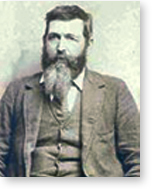
Officer Sampson E. Cole
On January 1, 1905, Officer Sampson Cole was shot and killed while investigating a disturbance involving a man with a gun.
A man located Officer Cole and told him that another man had threatened him with a handgun. Officer Cole and his son-in-law followed the man back to the location of the confrontation and then confronted the suspect on a set of railroad tracks.
Officer Cole drew his service revolver and ordered the suspect to raise his hands. The suspect raised his left hand and then reached into his right pocket, and pulled out a revolver. He immediately opened fire, striking Officer Cole’s son-in-law in the chest and then Officer Cole in the abdomen and neck, mortally wounding him.
The suspect fled but was arrested several days later in Fort Mill, S.C. He was returned to Charlotte where he was charged with murder. The jury found him guilty of the less serious charge of manslaughter and sentenced him to two years on the county chain gang.
Officer Cole had served with the Rural Police Department of Mecklenburg County for four years. He was survived by his wife. He was buried in Elmwood Cemetery in Charlotte.
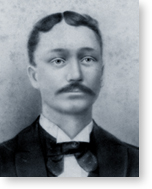
Special Officer John Robert Estridge
Special Officer J. Robert Estridge responded to a call about a disturbance in the balcony of the old Dixie Theatre on East Trade St. Family records say that he and his partner, Officer John Wilson, were coming up the stairs when both officers were shot. Estridge died that evening, March 29, 1913, from his wounds. He was 39 years old.
No one was ever apprehended.
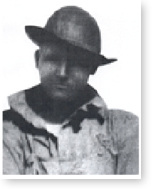
Officer John Franklin Fesperman
On Saturday, February 16, 1924, Officer Fesperman and Mecklenburg County police officers raided a liquor house near Myers Park. They arrested one man who was left under Officer Fesperman's charge, while the other officers went in search of the owner of the house. The arrestee pulled out a handgun and shot Officer Fesperman. He died on the way to the hospital.
Detective John North Byers
Detective John Byers and Chief of Detectives Joseph Orr were critically injured in an automobile crash while participating in a "test riot call" exercise. The driver of their vehicle lost control while attempting to pass a truck, skidded and then drove down an embankment. Orr succumbed to his injuries the next day on September 29, 1926. Byers died the day after that, on September 30, 1926. The driver of their vehicle survived the crash.
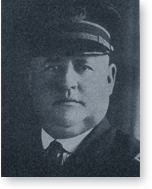
Chief of Detectives Joseph Eckles Orr
Chief of Detectives Joseph Orr and Detective John Byers were critically injured in an automobile crash while participating in a "test riot call" exercise. The driver of their vehicle lost control while attempting to pass a truck, skidded and then drove down an embankment. Orr succumbed to his injuries the next day on September 29, 1926. Byers died the day after that, on September 30, 1926. The driver of their vehicle survived the crash.
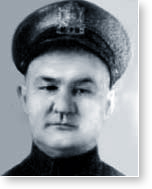
Officer Robert M. Reid
On December 31, 1926, Officer Reid was struck down by a car at the intersection of College and Trade Streets, as he was directing traffic to prevent congestion at the Square. Officer Reid, 49, died January 1, 1927 as a result of his injuries.
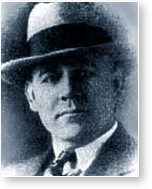
Detective Harvey Edgar Correll
On January 22, 1929, Detective Ed Correll and his partner were searching a house for stolen goods. During the search the suspect pulled out a gun and fired at the detectives. Detective Correll, 40,was fatally shot and his partner was wounded. Although the suspect fled the scene, he was apprehended a short time later.
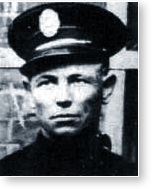
Officer William Stephen Rogers
Mecklenburg County Officer Stephen Rogers and a fellow officer were on foot patrol looking for several robbers in the Paw Creek community on August 30, 1929. Recent robberies of a drug store, a service station, and the attempted robbery of a combination United States Post Office and general store in west Mecklenburg County were believed to be the work of a single group. Officers had been sent into that community to investigate these robberies and to be on the lookout for the suspects. At about 3 a.m., the officers saw a new Ford Roadster pull onto a side road and start to turn around. The officers approached the car to determine the identity of the driver. As they approached, they identified themselves. The driver of the vehicle opened fire and fatally wounded Officer Rogers. The assailant was killed at the scene.
Officer Rogers was 33 years old and served with the Mecklenburg County Police Department for nearly six years. He was known as a fearless and conscientious officer, and was spoken of highly by his fellow officers and supervisors.
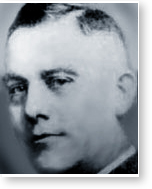
Detective Thomas H. Jenkins
Tragedy struck the Charlotte Police Department a second time in 1929, when Detective Thomas H. Jenkins was fatally wounded during the early morning hours of October 21st at First and Davidson streets.
Jenkins and another detective were making arrests to quell a disturbance at the corner, when one subject seized a riot gun held by the other detective. A scuffle ensued, resulting in the gun being fired, hitting Detective Jenkins in the abdomen. The shooter was never identified.
Jenkins had been with the York County, S.C. Sheriff’s Department from 1909 until 1924, when he joined the police force in Charlotte. Jenkins, 48, was described as “one of the most respected members of the City Police Department.”
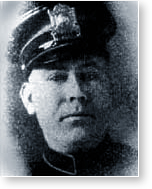
Officer Benjamin H. Frye
42 year old night patrolman Ben Frye was fatally shot during the early morning hours of Monday, June 9, 1930. Wounded by five shots, Officer Frye told officers from his deathbed that he found the store’s front door unlocked and went in to investigate. When Frye flashed his light inside, the robber opened fire before the officer had a chance to defend himself. Officer Frye was able to crawl out the back of the store, over a platform and through an alley to the front of an adjoining store, where he attracted the attention of a watchman. He was carried to Mercy Hospital, where he died at 5:15 a.m.
No one was ever charged in Officer Frye’s death.
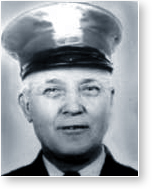
Officer Charles P. Nichols
In the early morning on March 29, 1936, Officer Nichols was on patrol in the business district. At the intersection of Third and S. Tryon Streets, Officer Nichols was struck by a hit-and-run driver. Officer Nichols, 60, remained unconscious until his death on April 17.
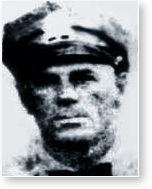
Officer Rufus L. Biggers
On February 12, 1937, Officer Biggers, a motorcycle officer, escorted a school bus to Matthews School. As he was returning to his regular patrol area, he was struck and killed by a hit-and-run driver. Officer Biggers was 47 years old.
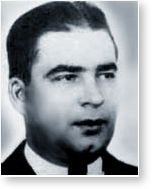
Detective Charlie Herbert Baker
Detective Charlie Baker, 36, was transporting two prisoners back to Charlotte, when he was involved in a fatal car crash on April 7,1941. He was hospitalized in Roanoke Rapids, N.C. and died from his injuries five days later on April 12.
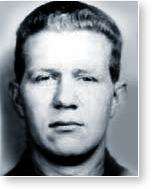
Officer Johnny Reed Annas
In the evening of May 21, 1960, Officer Annas and another officer were called to a fight. When they arrived, more than 100 spectators had gathered. While Officer Annas went to the patrol car to call for backup, members of the crowd assaulted the other officer and took his gun.
As Officer Annas returned, he was shot six times with his fellow officer’s gun. The shooter, Mellon Faust, received the death penalty in 1961 for the murder of Officer Johnny Annas. His sentence was commuted to life by Governor Terry Sanford, and he was released in 1986. Officer Annas was 25 at the time of his death, and had been with the Charlotte Police Department for two years.
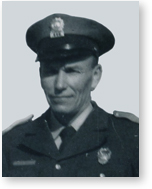
Officer Paul Reed
Officer Paul Reed, age 40, a 13-year veteran of the Mecklenburg County Police Department, died December 31, 1960 while responding to a call to the Mecklenburg County Home to investigate a report that wing tip tanks, probably from a jet plane, had fallen there. A maintenance man at the Home reported that Officer Reed had walked with him about 500 yards to investigate, when the officer suddenly collapsed. After the maintenance man called for help, a highway patrolman tried to revive Reed but was unsuccessful. It later was determined that he died of a heart attack.
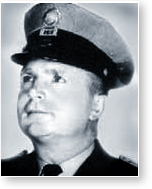
Sergeant Lewis Edward Robinson, Sr.
On May 4, 1970, Sgt Lewis Robinson led six other Mecklenburg County Officers and two Highway Patrol officers to serve a warrant on a subject. When he was not located in his trailer, officers began searching the surrounding area. Sgt. Robinson was ambushed and mortally wounded with a high-powered rifle shot from a wooded area. His assailant was critically injured in an exchange of gunfire before being arrested.
Sgt. Robinson, 44, was regarded as steady and reliable. Born in Davidson, he joined the Mecklenburg County Police in 1948 after serving in the Navy for five years. He was a Mecklenburg County Officer for 22 years.
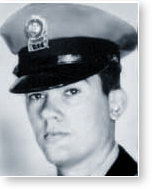
Officer Ronnie E. McGraw
Mecklenburg County Police Officer Ronnie McGraw, 25, was shot in the back and chest on October 17, 1970, as he and 12 other law enforcement officers attempted to serve gambling warrants in a house on East Fourth Street. Other officers were wounded: one was shot in the stomach; another suffered flash burns to the eyes. Police arrested 17 people and confiscated $42,000, a shotgun, and eight pistols.
McGraw was known as an industrious, bright, and dedicated police officer. He was intensely interested in fighting the growing traffic in drugs. He studied the subject of drug investigations and was a stickler for the legal details that, left unattended, could undo weeks of police work. McGraw spoke to youth groups at schools and churches, and gave a willing ear to troubled youngsters who had no adults in whom to confide.
McGraw made the eligibility list for promotion to sergeant after only three years on the force. A newcomer to the Vice Squad, he had even been entrusted with planning one of its largest operations that spring.
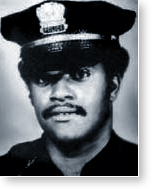
Officer Edmond "Ed" N. Cannon
While on routine patrol during the evening of November 23, 1981, Officer Ed Cannon stopped at a convenience store in his patrol area and surprised several subjects who had just robbed the store. The subjects shot Officer Cannon five times, mortally wounding him, and fled.
On and off-duty officers combed the woods near the store for evidence that night and into the next day. A reward fund of more than $26,000 was established for information leading to the arrests and conviction of the 26-year-old officer’s slayers. The shooter was later convicted and has since died in prison.
A Cabarrus County native, Officer Cannon joined the Charlotte Police Department in June 1977, after spending three years as an Army paratrooper.
Fellow officers praised him as “a fearless cop who loved his work and had a knack for dealing with people.” A sergeant was quoted as saying that Ed Cannon “treated everybody alike and he got along with everybody.”
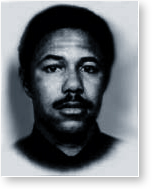
Officer Ernest Coleman
While working in uniform at an off-duty security job on June 30, 1982, Officer Ernest Coleman was fatally shot by a subject he had earlier ejected from the store for rowdiness. The 31-year-old officer never regained consciousness and died during the early morning hours of July 1 at Charlotte Memorial Hospital. Coleman had been on the force for 18 months.
Over 2,000 mourners attended the funeral for the slain officer. City officials established a joint memorial fund to benefit the children of the two officers, Coleman and Cannon, who were slain within a year of each other. The two tragedies prompted several businesses and organizations to donate bullet-proof vests for officers.
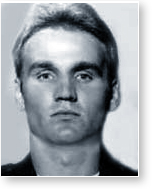
Officer Timothy W. Whittington
While on patrol in the early morning hours of July 16, 1985, Officer Tim Whittington responded to a burglary call. An elderly couple reported that a man came to their door asking to use their phone. Once inside, the man stabbed the elderly man, took a pistol from the home, and fled. An hour later, Officer Whittington was fatally shot when he stopped his patrol car to question a subject fitting the assailant’s description. The suspect was apprehended and sentenced to 150 years in prison. Whittington had been a Charlotte Police Officer for three years. In memory of her husband, Cindy Whittington, a former Charlotte Police Officer, donated money to the Charlotte Police Department for 34 bulletproof vests.
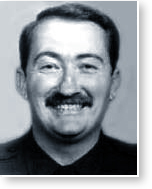
Officer Robert L. Smith
On January 15, 1987, Charlotte Police Officer Robert L. Smith was fatally shot during a manhunt for a suspect who’d been shooting into a condominium complex on Spyglass Place. Smith, who was 27, at the time of his death, had joined the police force as soon as he was old enough.
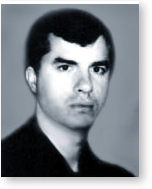
Officer Milus "Terry" Lyles
On Sunday night, August 6, 1990, Officer Terry Lyles and another officer responded to a domestic disturbance call. The officers arrested a 44 year old suspect on the charge of communicating threats. After the officers searched and cuffed him, he was placed in the back seat of Lyles’ patrol car. As Officer Lyles drove toward the Mecklenburg County Jail, two shots hit him in the back of his bullet proof vest. Officer Lyles stumbled out of the car and shouted to residents to call 911. A third shot crashed through the window of the cruiser and struck Lyles just over the right eye. He died the next day.
Investigators discovered that the prisoner had concealed a tiny derringer in his underwear which was undetected by both officers when they searched him. On May 3, 1991, a Mecklenburg Superior Court jury sentenced the suspect to death. Calvin Cunningham was only the 2nd person in history to be sentenced to death for the murder of a Charlotte police officer. He was removed from death row after a retrial in 1994 and he received a life sentence. He was denied parole in August 2013.
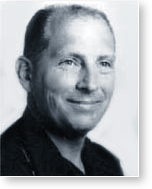
Officer Eugene A. "Gene" Griffin
In the early evening hours of November 22, 1991, Officer Gene Griffin was working an off-duty security job at the Red Roof Inn. After a noise complaint, Griffin expelled three 17-year-olds from the hotel. Fifteen minutes later, the youths returned to the lobby. One of them raised a shotgun and shot Griffin at point-blank range. The three teenagers, who were later charged with murder, were high school dropouts who lived nearby.
It was the fourteenth murder of a Charlotte officer and the city’s 108th homicide in what had already become a record-setting year for murders in the city. Griffin, 42, was survived by his wife, Hilda, also a Charlotte police officer, and two children.
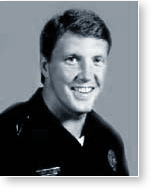
Officer Anthony Alford Nobles
Officers John Burnette and Andy Nobles responded to what appeared to be a routine call the night of Tuesday, October 5, 1993.
Someone had reported a suspicious vehicle and persons at Boulevard Homes, a public housing complex that was part of the officers’ Adam Two Patrol District. But when the officers arrived and started talking to a suspect, he ran. Nobles and Burnette chased suspect into a nearby wooded area. A few minutes later, shots rang out. Nobles, 26, and Burnette, 25, were each shot in the head.
When they were pronounced dead at Carolinas Medical Center, the recently consolidated Charlotte-Mecklenburg Police Department recorded its first slaying of an officer. It was also the first time in Charlotte and Mecklenburg County history that two officers died in a single incident.
The deaths sparked public outrage. Thousands attended their funerals. Radio and television programs bristled with calls from citizens demanding that something be done about the growing violent crime problems. Memorial services were held, and monuments dedicated. Since the officers died, the very streets where they lost their lives have been named after them.
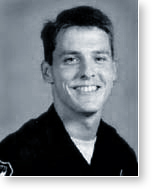
Officer John Thomas Burnette, III
Officers John Burnette and Andy Nobles responded to what appeared to be a routine call the night of Tuesday, October 5, 1993.
Someone had reported a suspicious vehicle and persons at Boulevard Homes, a public housing complex that was part of the officers’ Adam Two Patrol District. But when the officers arrived and started talking to a suspect, he ran. Nobles and Burnette chased suspect into a nearby wooded area. A few minutes later, shots rang out. Nobles, 26, and Burnette, 25, were each shot in the head.
When they were pronounced dead at Carolinas Medical Center, the recently consolidated Charlotte-Mecklenburg Police Department recorded its first slaying of an officer. It was also the first time in Charlotte and Mecklenburg County history that two officers died in a single incident.
The deaths sparked public outrage. Thousands attended their funerals. Radio and television programs bristled with calls from citizens demanding that something be done about the growing violent crime problems. Memorial services were held, and monuments dedicated. Since the officers died, the very streets where they lost their lives have been named after them.
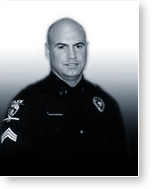
Sergeant Anthony Scott Futrell
On July 17, 2002, Sgt. Anthony Scott Futrell, a 38 year old Charlotte-Mecklenburg Police Department pilot, died in an airplane crash in eastern North Carolina. He was making a surveillance flight for the Civil Air Patrol as part of a statewide drug eradication program. Futrell became a Mecklenburg County police officer in 1987. He influenced many young officers as a member of the training staff at the Police Training Academy. He also served as a member of the SWAT and ALERT teams and leader of the Field Force Unit. In 2001 he became supervisor of the Aviation Unit. He is survived by his wife and two children.
[video] -
A Tribute to Scott
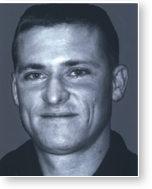
Officer Jeffrey Shelton
Jeff Shelton and Sean Clark were responding to what should have been a routine disturbance call for service at the Timber Ridge Apartments near Milton Road in east Charlotte the night of Saturday, March 31, 2007.
They were both shot in the head around 11:15 p.m. while struggling with a suspect in the apartment complex parking lot. They died at Carolinas Medical Center in the early morning hours of April 1, 2007, but not before officers picked up Demeatrius Montgomery, who later was charged with their murder. Montgomery has been tried and sentenced to life in prison.
The community responded to the death of Officers Shelton and Clark with an outpouring of grief, offers of support and aid and thousands of dollars in donations for the slain officers' families. Thousands of officers, including those from more than 38 different departments, joined the Charlotte-Mecklenburg Police Department in mourning the loss of these young officers. Thousands of citizens lined the funeral procession with signs, American flags and tears of grief to pay their final respects to Officers Shelton and Clark. It was an unforgettable show of support.
Officer Shelton, 35, was hired February 28, 2001 and graduated in the 136th Recruit Class. Before joining CMPD, he served in the United States Marine Corps. He was married to Jennifer Sparks Shelton.
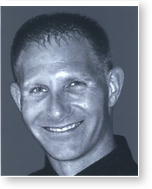
Officer Sean Robert Clark
Sean Clark and Jeff Shelton were responding to what should have been a routine distrubance call for service at the Timber Ridge Apartments near Milton Road in east Charlotte the night of Saturday, March 31, 2007.
They were both shot in the head around 11:15 p.m. while struggling with a suspect in the apartment complex parking lot. They died at Carolinas Medical Center in the early morning hours of April 1, 2007, but not before officers picked up Demeatrius Montgomery, who later was charged with their murders. Montgomery has been tried and sentenced to life in prison.
The community responded to the deaths of Officers Clark and Shelton with an outpouring of grief, offers of support and aid and thousands of dollars in donations for the slain officers' families. Thousands of officers, including those from more than 38 different departments, joined the Charlotte-Mecklenburg Police Department in mourning the loss of these young officers. Thousands of citizens lined the funeral procession with signs, American flags and tears of grief to pay their final respects to Officers Clark and Shelton. It was an unforgettable show of support.
Officer Clark, 34, was hired January 23, 2006 and graduated in the 148th Recruit Class. He was a 1991 graduate of West Mecklenburg High School and had served in the United States Air Force before joining CMPD. He was married to Sherry Jones Clark. At the time of Sean's death, they had a 3 1/2 year old son, Brayden, and they were awaiting the birth of their second son.
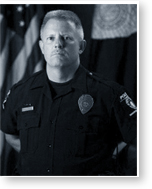
Officer Frederick A. Thornton
On February 25, 2011, Officer Thornton was critically injured when a flash grenade discharged while he was attempting to render the equipment safe after a SWAT warrant service. Officer Thornton underwent emergency surgery but succumbed to his injuries later that evening.
Officer Thornton was a 28 year veteran of the Charlotte-Mecklenburg Police Department . For 23 of those years he served on the SWAT team and was the longest serving member of the team in the department’s history. Throughout his career in law enforcement, Officer Thornton received numerous departmental and state awards for his bravery, heroism, and community service. He was deployed to assist in affected areas after Hurricane Katrina in 2005 and 2006, as well as flood relief efforts in Indiana in 2008.
Officer Thornton is survived by his wife, four children, and a granddaughter. Fred was 50 years old at the time of his death.
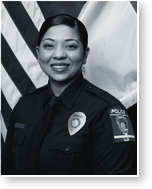
Officer Mia Goodwin
On December 22, 2021, shortly before 3:40 AM, Officer Mia Goodwin lost her life in the line of duty while assisting with traffic direction and control on the scene of a tractor-trailer truck crash on Interstate-85 near W.T. Harris Blvd. During this incident, a second crash involving two additional trucks occurred in the area, striking multiple CMPD patrol vehicles and Officer Goodwin. Three other officers were also injured and transported to the hospital for treatment.
Officer Goodwin was a six-year veteran of the Charlotte Mecklenburg Police Department and a member of the 172nd Recruit Class. She was assigned to the University City Division and was the first female officer in CMPD’s history to be killed in the line of duty. Officer Goodwin’s service to our community was honored by thousands of people through social media condolences, by paying respects at the University City Division office, and by attending the procession and memorial service. The service was held at First Baptist Church in downtown Charlotte with family, community members, law enforcement officers, firefighters, and first responders from multiple states present.
Officer Goodwin, a Passaic, New Jersey native and a High Point University (NC) graduate, was 33 years old and came from a family of first responders. She is survived by her husband, Brenton Goodwin, a Charlotte firefighter, and their three young children: Two daughters (ages three and four months) and one son (age one).
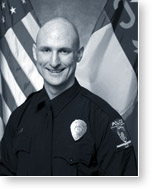
Officer Joshua Eyer
Officer Joshua M. Eyer, 31, was killed in the line of duty on Monday, April 29, 2024. In the afternoon hours, the United States Marshal’s Regional Fugitive Task Force was attempting to serve an arrest warrant on Galway Drive in East Charlotte when members of that team undertook gunfire from the wanted subject. Three members of that team were downed, and urgent assistance from other officers was requested. Officer Joshua Eyer immediately responded to the scene to assist.
Upon his arrival, Officer Eyer was struck by gunfire and was critically wounded. He was transported to Atrium hospital and fought valiantly for several hours before succumbing to his wounds that same evening.
From this incident, eight law enforcement officers were struck by gunfire. Four of those eight died from their injuries. Among the four fatally wounded officers were United States Deputy Marshal Thomas “Tommy” Weeks, North Carolina Department of Adult Corrections Officer Samuel Poloche and North Carolina Department of Adult Corrections Officer William “Alden” Elliott. This date marked the deadliest day for law enforcement in Mecklenburg County history.
Officer Joshua Eyer was survived by his wife of seven years, Ashley Eyer, and his nearly-three-year-old son, Andrew Eyer. He served the Charlotte-Mecklenburg Police Department nobly for six years and was assigned to the North Tryon Division. Prior to and during his tenure at CMPD, he served in the North Carolina Army National Guard for 12 years, including two deployments to Afghanistan and Kuwait.
Following his death, law enforcement officers and community members showed their unwavering support for Officer Eyer, his family and the Charlotte-Mecklenburg Police Department. Thousands attended his funeral service at First Baptist Charlotte, lined an over 5-mile procession route and paid tribute by means of donation and memorials.
Quick Facts About Charlotte
Posted Population:
- 966,407 City of Charlotte
- 69,843 Unincorporated Mecklenburg County
- 1,036,250 CMPD jurisdiction
Total Square Miles:
- 314 City of Charlotte
- 546 Mecklenburg County
- 411 CMPD jurisdiction
CMPD Employees:
- 1,766 sworn
- 546 civilian
- 130 volunteers (Animal Care & Control had 449 volunteers)
About CMPD:
- CMPD is a diverse, progressive, service oriented, and technology-driven metropolitan police department whose goal is to make Charlotte one of the safest cities America.
- CMPD was formed in 1993 by merging the Charlotte City Police Department and Mecklenburg County Rural Police Department and has a rich history that dates back to 1880.
- The CMPD is organized into the Office of the Chief, which includes five (5) Service Groups (Administrative, Investigative, Patrol, Learning & Wellness, and Special) lead by Deputy Chiefs, one (1) Professional Accountability Bureau lead by a Major, and four (4) Divisions lead by civilian CMPD Assistant Directors - Public Affairs, Human Resources, Attorney’s Office, and Business Services
- The CMPD has four (4) Patrol Service Areas led by Majors and fourteen (14) Patrol Divisions led by Captains.
- CMPD employs the latest equipment and technology available in law enforcement including Latent Fingerprinting System, Body Worn Cameras, Property and Laboratory Information Management System, License Plate Reader, and Real Time Crime Center.
About Charlotte:
Charlotte is one of the largest cities in the U.S. and the largest city in North Carolina. Charlotte is known for its robust financial industry, particularly its status as a major banking center, a significant hub for sports, and for its large and well-maintained tree canopy, making the region a popular destination for recreation and outdoor activities.
- #1 largest urban area in the Carolinas
- 15th largest city in the US
- 2.9 million regional population
- 1.6 million labor force
- 117 people move to the region everyday
- 35% more racially diverse than the national average
- 1 in 6 residents born in another country
- 25-minute average commute time
- 20 miles of completed light rail, with an additional 25 miles planned by 2030
Living in Charlotte
- #1 city for people looking for an affordable place to live with great weather
- 226 days of sunshine annually
- 4 distinct seasons
- Home to 6 major & 2 minor league sports teams
- Birthplace of NASCAR, home to Charlotte Motor Speedway and NASCAR Hall of Fame
- 24+ nationally ranked universities within 200-mile radius
- 40+ regional colleges, universities, and community colleges
- 25+ museums, performing arts theatres and music venues
- 100+ festivals, cultural celebrations and international festivals held annually
- 35+ locally owned craft breweries
Source: Charlotte Regional Business Alliance
Fun Facts About the Queen City, Charlotte
- Charlotte was named after Queen Charlotte of Mecklenburg-Strelitz, consort of King George III. Any “Bridgerton” fans here? Originally, the city’s name was “Charlotte Town.” You’ll see nods to the royal in the form of crowns, street names, and statues like this one at the Charlotte Douglas International Airport.
- The Uptown area is more than just the “downtown” area. In the mid-1700s, Uptown was the site of a trading path used by Indigenous Americans traveling from Georgia to Virginia. Settlers going into town said they were always “going up to town” due to a slight elevation. Now, it’s known as Uptown.
- Charlotte is the site of the first documented discovery of gold in the US. In 1799, 12-year-old Conrad Reed found a 17-pound rock that turned out to be gold. His father sold it for $3.50, not knowing it was worth more than $3,000 at that time. This discovery marked the beginning of the North Carolina Gold Rush. You can visit Reed Gold Mine today.
- President George Washington visited the city in May 1791. In a diary entry, he called the city a “trifling” place, meaning it was insignificant.
- The Mint Museum was the first art museum established in North Carolina. It opened in 1936 with two locations — Randolph Road and the other in Uptown.
- There are entire towns and the Cowans Ford Dam under Lake Norman. Long Island Cotton Mill and Mill Village were shut down in the 1950s for the formation of the lake. It’s the largest man-made body of fresh water in the state.
- During the American Revolution, General Charles Cornwallis arrived in Charlotte with the British Army but was attacked by local patriots. When soldiers retreated, legend says they disturbed nests of bees and hornets, leading to quite the chase. Cornwallis called the city a “hornet’s nest of rebellion,” leaving Charlotte with the Hornet’s Nest nickname.
- The Mecklenburg Declaration of Independence is said to be the first document in the country to claim independence from England. It was signed on May 20, 1775 — now known as Meck Dec Day.
- The city’s most historic snowstorm happened in 1902. Charlotte got a total of 17.4 inches of snow that year. On Feb. 15, the city recorded 14 inches — the most to ever fall in a day from a single snowstorm in the city’s history.
- Charlotte is the largest city in North Carolina. You probably already knew that. It surpassed Winston-Salem in population by the 1930 census and maintains that title today.
- The city hosts Heroes Con every year. The annual comic book convention is one of the oldest and largest independent comic book conventions in the US.
- In November 1959, Charlotte was home to the first Family Dollar. Now, the store has thousands of locations in 48 states. It’s now a subsidiary of the Dollar Tree.
- Charlotte is the Pimento Cheese Capital of the World. Ruth’s Salads, based in Charlotte, produces 45,000 pounds of the staple — the most of any company in the southeast. Charlotteans eat it up. The other biggest market for the Carolina caviar is Raleigh-Durham.
- Arguably the weirdest landmark in the city is the Firebird sculpture. Affectionately known as “The Disco Chicken,” it’s found outside the Bechtler Museum of Modern Art. It’s a 17-ft avian adored with more than 7,500 pieces of glass.
- Charlotte’s oldest mascot is Homer with the Charlotte Knights. Homer’s birthday is April 15, 1989, and his official birthplace is the original Knights Stadium in Fort Mill, SC.
Source: CLT Today, 4/24/2024